
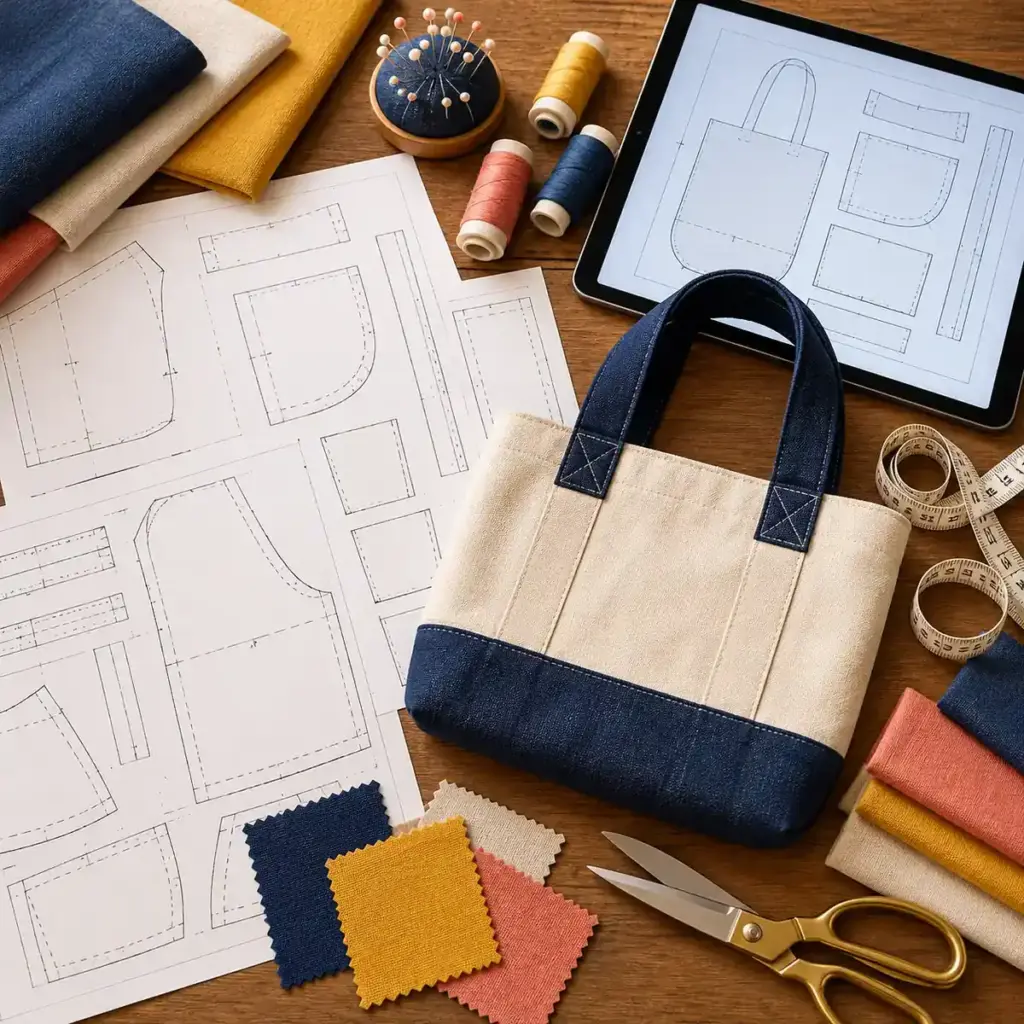



Beginner sewing pattern PDFs are downloadable instructions and pattern pieces used to cut and assemble physical projects. In Etsy's fall/winter 2026 report, searches for sewing patterns for beginners rose 125% year over year in its tracked market. That does not prove every sewing PDF is profitable; it highlights a buyer use case where correct measurements, clear instructions and real pattern testing matter more than decorative cover art.
Select one achievable first project
A lined tote, simple zip pouch or cushion cover can be useful learning projects. Choose one that fits the maker’s skill and can be documented without skipping critical steps. This guide uses a hypothetical tote-bag starter pack to explain what a legitimate digital pattern would need. Do not sell an untested drafted silhouette as a proven pattern.
Before generating files, decide the finished dimensions, seam allowance, fabric type, handle placement, machine requirements and difficulty level. Be explicit about whether a project requires a zipper foot, interfacing, lining, turning tool or other supplies.
Files that should ship with a beginner pattern
- Start-Here.pdf: skill level, machine and supply list, print settings, glossary and steps for assembling tiled pages.
- Pattern-US-Letter.pdf: correctly tiled pages with registration marks, page numbers and a calibration square.
- Pattern-A4.pdf: separately checked tiled pages for A4 printers.
- Pattern-A0.pdf: an optional large-format version, tested for a compatible print shop.
- Instructions.pdf: step-by-step construction with clear, original images or accurate diagrams.
- Fabric-layout.pdf: cutting diagrams that specify fabric width, grain direction, nap and fold.
- License.pdf: clearly defined permissions for home use and any finished-goods commercial use.
Accuracy before aesthetics: scale and seam allowances
Put a 1-inch or 5-centimeter test square on the pattern and tell buyers to print at 100% / actual size when required. Check that a printed test square measures correctly with a physical ruler. Include seam allowances inside the printed pieces or explain clearly that they must be added—never leave the buyer guessing. Make notches, grain lines, cut quantities, fold lines and pattern-piece names legible when printed in black and white.
For a hypothetical tote, it is not enough to draw two rectangles. Test the cut width and height against the intended finished shape after seams, hems and handle attachment. If a dimension is wrong, fix the pattern and retest instead of hiding the error with a vague note about sizing differences.
An end-to-end pattern QA process
- Print a full tiled copy from a different computer with ordinary printer defaults; confirm instructions lead to true scale.
- Assemble the pieces in order, checking alignment marks and paper margins.
- Cut the specified fabric using the stated layout and quantities.
- Construct the whole project while following only the supplied instructions.
- Record every ambiguous step, especially turning, seam finishing, hems and orientation.
- Check the finished item against the advertised dimensions and fit or load limitations.
- Revise the PDF, increment its version, and repeat the failing steps with the corrected file.
If any safety claim is relevant—such as weight-bearing capacity of a bag—test it appropriately and do not invent a numerical guarantee.
A release checklist buyers can understand
| Element | Verify before sale |
|---|---|
| Difficulty | Steps match a beginner’s skills |
| Scale | Calibration square prints correctly |
| Formats | US Letter, A4 and optional A0 each tested |
| Pieces | Notches, grain, allowances, quantities clear |
| Fabric requirements | Material and quantity tested |
| License | Finished-goods rights stated |
Selling and positioning the PDF
Search intent matters: “beginner tote bag sewing pattern PDF” is narrower than “sewing patterns” and lets you describe an exact outcome. Show an authentic sewn sample, photographed pattern pieces and a legible construction detail—not an AI image implying you have tested a physical prototype. Clearly distinguish digital sewing pattern from a finished bag or fabric kit.
Use the preview-image plan for an accurate gallery and the licensing guide to clarify whether customers may sell products made from the pattern. Review copyright issues for artwork and third-party patterns with qualified advice when necessary.
Frequently asked questions
Is an A4 PDF the same as US Letter?
No. Page dimensions differ, so tile and test each supported print size rather than assuming automatic scaling.
Can I sell a pattern without making the project?
You can publish a design, but presenting it as a functional tested pattern without sewing and validating it would mislead buyers.
Does buying the pattern permit selling finished items?
Only if the applicable license expressly grants that permission, subject to applicable law and third-party rights.
For a related hands-on activity format, browse the holiday craft-night printables guide. A sewing pattern needs a physically tested sample as well as accurate digital pages.
Research notes and next steps
The trend signals referenced here come from Etsy's 2026 Seller Trend Report. Etsy measures activity on its own marketplace; these figures are not forecasts of demand or revenue for an unrelated digital-download store. This article translates those signals into testable product concepts, not documented sales outcomes.
Editorial note: Product-pack examples, page counts and any test prices in this article are illustrative specifications, not existing products or measured conversion rates. Images are editorial illustrations unless explicitly identified as real product previews.